
Non-Extractive Development
The Restaurant on the Corner
What non-extractive development actually means — and why it produces better buildings, better communities, and better outcomes for everyone at the table.
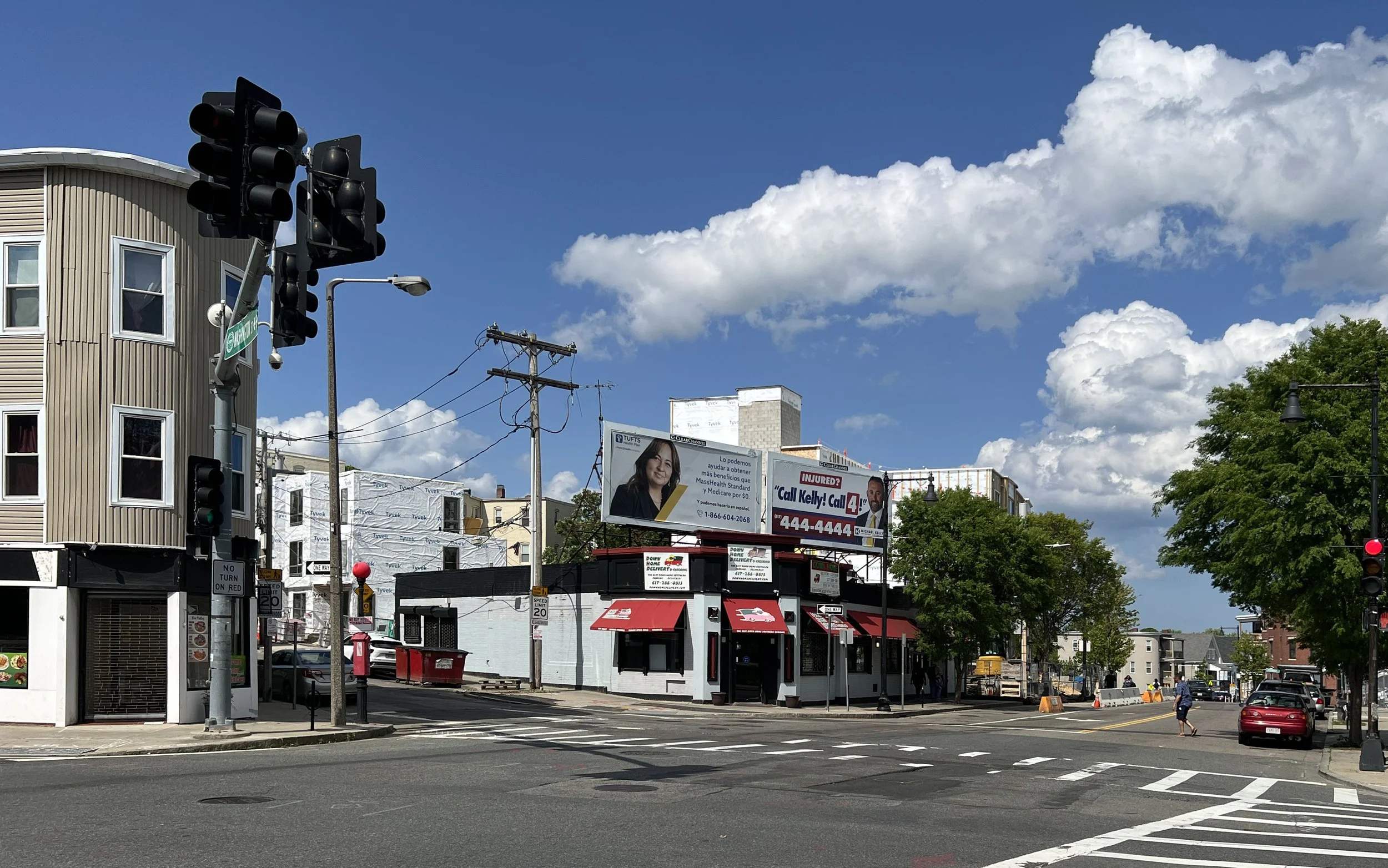
View of the corner Restaurant at 2 Bowdoin Street in Dorchester, MA. The owner partnered with STACK to develop the property in a Non-Extractive way.
Picture the restaurant on the corner. The owner has been there for thirty years. His kids grew up in the neighborhood. He knows every regular by name, knows which table they prefer, knows who takes their coffee black. The restaurant isn't just his business, it's his identity, his anchor, his reason to be in this community.
Then a developer comes knocking.
The offer is real money. Life-changing money, maybe. But accepting it means selling the building, closing the restaurant, leaving the neighborhood that shaped him and that he helped shape. The developer, operating on a clean financial model, optimizing for return on equity, has no particular reason to care about any of that. The site has value. The opportunity has a window. The numbers work.
This is the moment that plays out thousands of times a year in cities like Boston. And it's the moment that defines what kind of city we're building.
We call what happens next extractive development. And we've spent the last decade trying to find a different way.
What Extraction Actually Means
Gentrification is a complicated word. Neighborhood improvement is not inherently bad. Rising values, new investment, safer streets, better services. These are things communities often fight for, sometimes for generations. The problem isn't improvement. The problem is who captures the benefit and who absorbs the cost.
In the conventional development model, capital flows in from outside. National lenders, institutional investors, equity partners with no particular connection to the place. The project gets built. The rents rise. The longtime residents who built the underlying value and character of the neighborhood, who made it desirable in the first place, find themselves priced out. The wealth generated by that improvement leaves the community. It goes to the bank in another city, the equity fund in another state, the developer who already lives somewhere else.
That's extraction. Not in a conspiratorial sense, nobody has to be acting in bad faith for this to happen. It's just the logic of capital flowing toward return, without any countervailing force that says: the people already here matter. Their stake in this place has value too.
The people already here matter. Their stake in this place has value too — even when it doesn't show up on a spreadsheet.
And then there's the subtler kind of extraction: the landlord who doesn't live in the building, doesn't know the tenants, has no relationship with the community, and therefore has no reason not to price every unit at the absolute ceiling the market will bear. The money collected in rent leaves the neighborhood ecosystem entirely. It doesn't go to the bakery down the street or the dance studio around the corner. It goes wherever the capital goes.
Compare that to the landlord who lives two floors above his tenants. Who says hello every morning. Who's known the family in 3B for six years and knows they take good care of the place and aren't going anywhere. That landlord doesn't charge maximum market rate, not because he's naive about money, but because the relationship has value that doesn't fit neatly into a pro forma.
This isn't nostalgia. It's how human communities have always functioned. We evolved to live in groups where people know each other, look out for each other, and carry some mutual obligation. That social fabric, the informal insurance of community, the credit extended at the corner store, the neighbor who watches your kids, has real economic value. Extractive development destroys it. Non-extractive development tries to preserve it.

View of the proposed mixed use building at 2 Bowdoin Street. With full community support, the owner received BPDA and ZBA aprooval to grow his restaurant and add 22 residential units to the project.