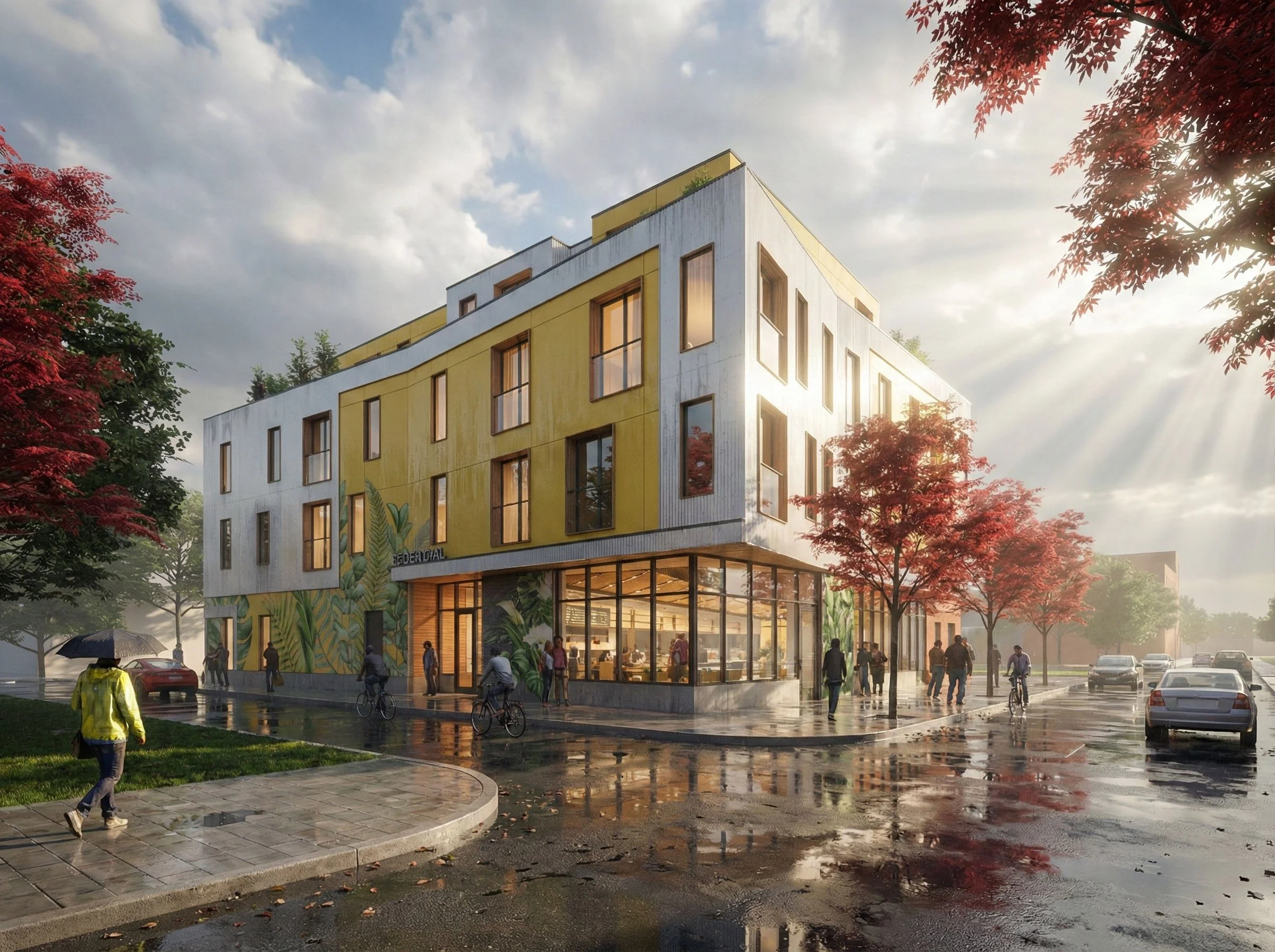
Anatomy of a Zombie Project
Approved. Entitled. Fully designed. And still unable to move forward.
These “zombie projects” aren’t failures of vision, they’re the result of designs built for a financial reality that no longer exists. Today’s market demands something different: residential architecture that is tested against cost, feasibility, and performance from day one.
Non-Extractive Development
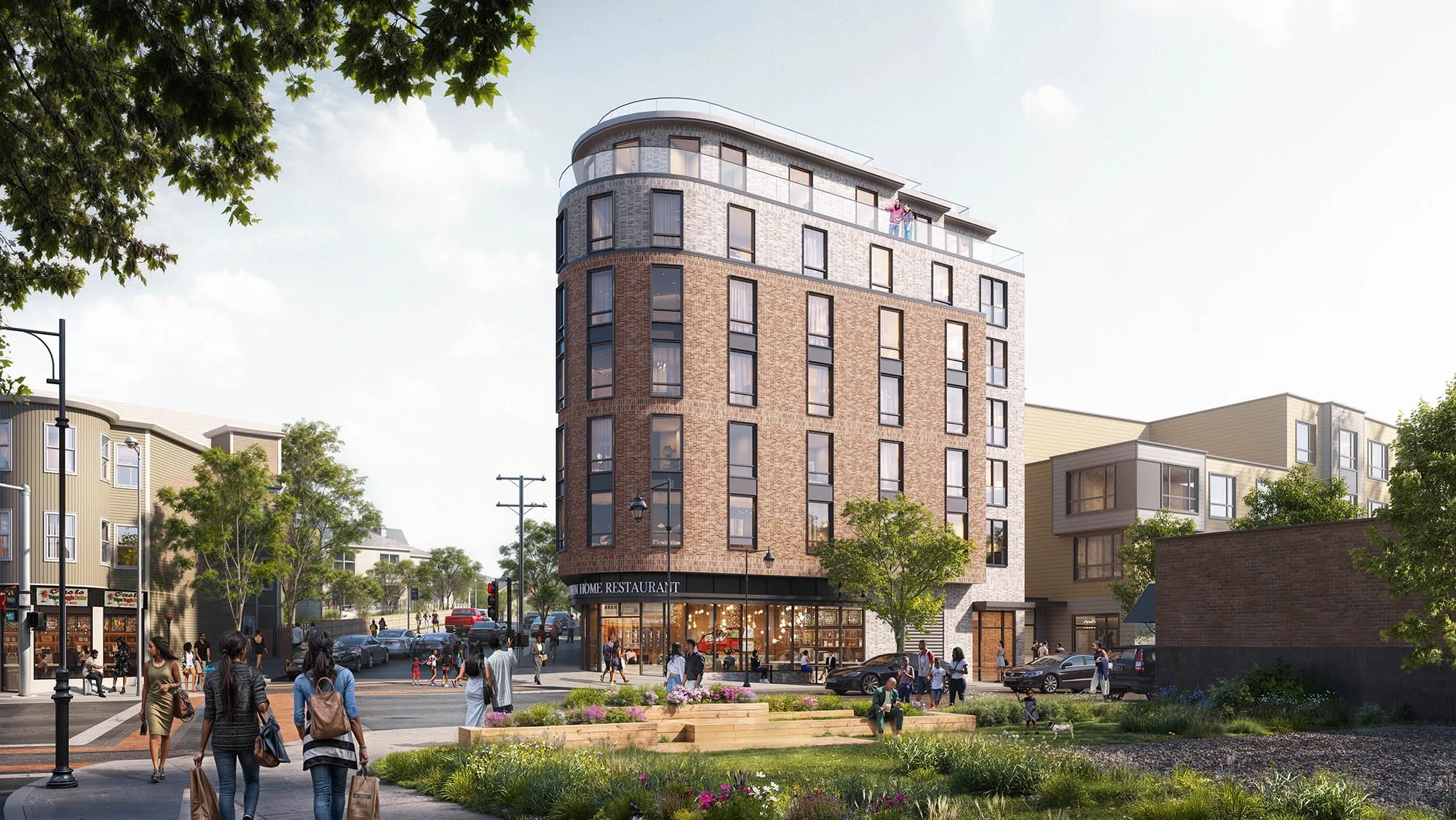
Picture the restaurant on the corner. The owner has been there thirty years. His kids grew up in the neighborhood. He knows every regular by name. Then a developer comes knocking. This is the moment that plays out thousands of times a year in cities like Boston, and it almost always ends the same way: outside capital buys the site, the community loses its anchor, and the wealth leaves the neighborhood entirely.
Non-extractive development is the alternative. It means helping longtime landowners build on their own property, keeping their equity in the community, and turning neighbors into advocates instead of opponents. This is what that looks like in practice.
Architecture Is Not Enough Anymore
Across Boston and New England, many residential projects now reach zoning approval but never get built. Rising costs, higher interest rates, and misaligned design decisions have created a growing wave of “shovel-ready but economically dead” developments. This article explains why we rebuilt our practice at Stack Architecture around integrating design, construction cost, and financial performance from the very beginning.
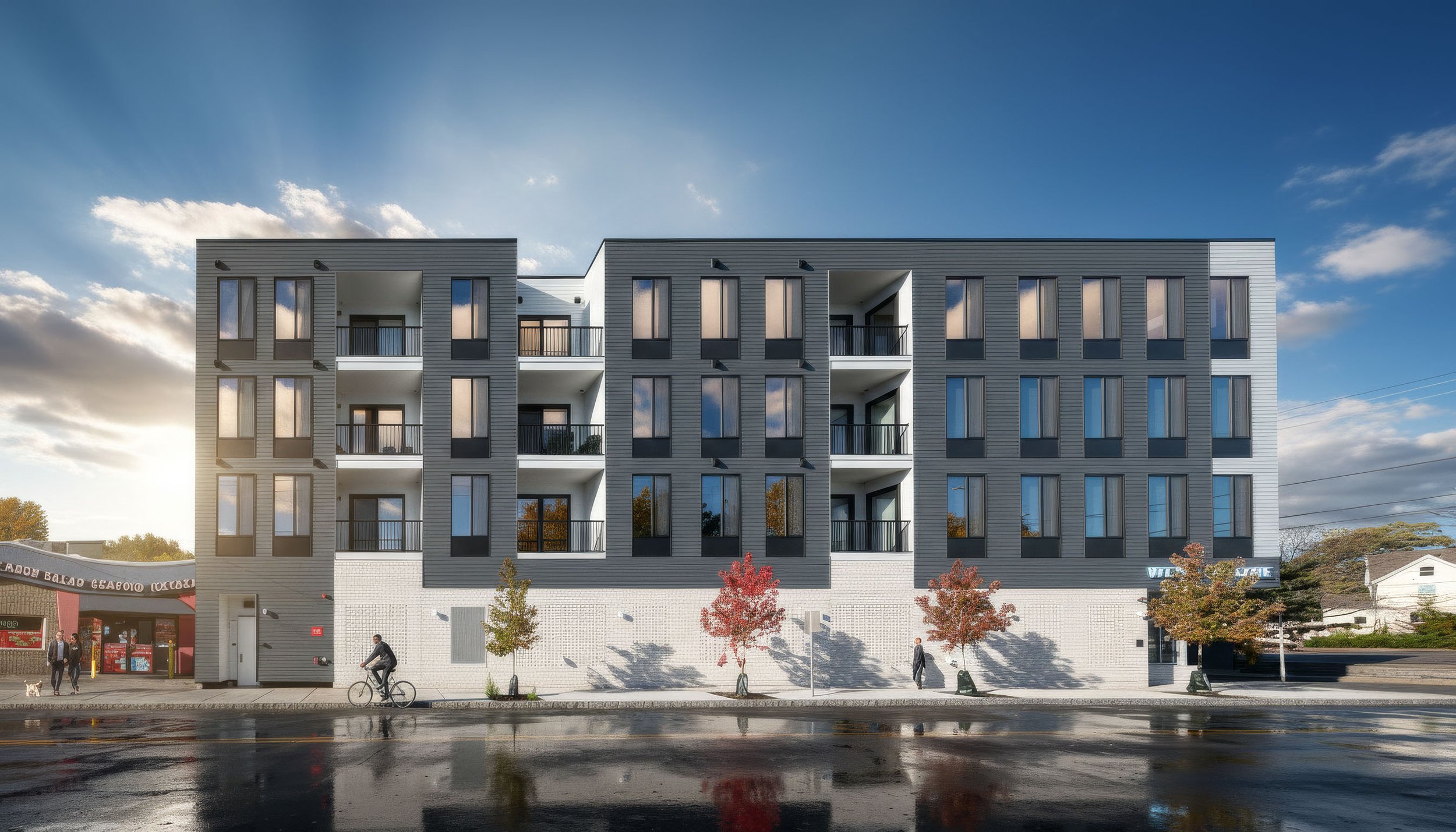
Architects with Skin in the Game Design Differently
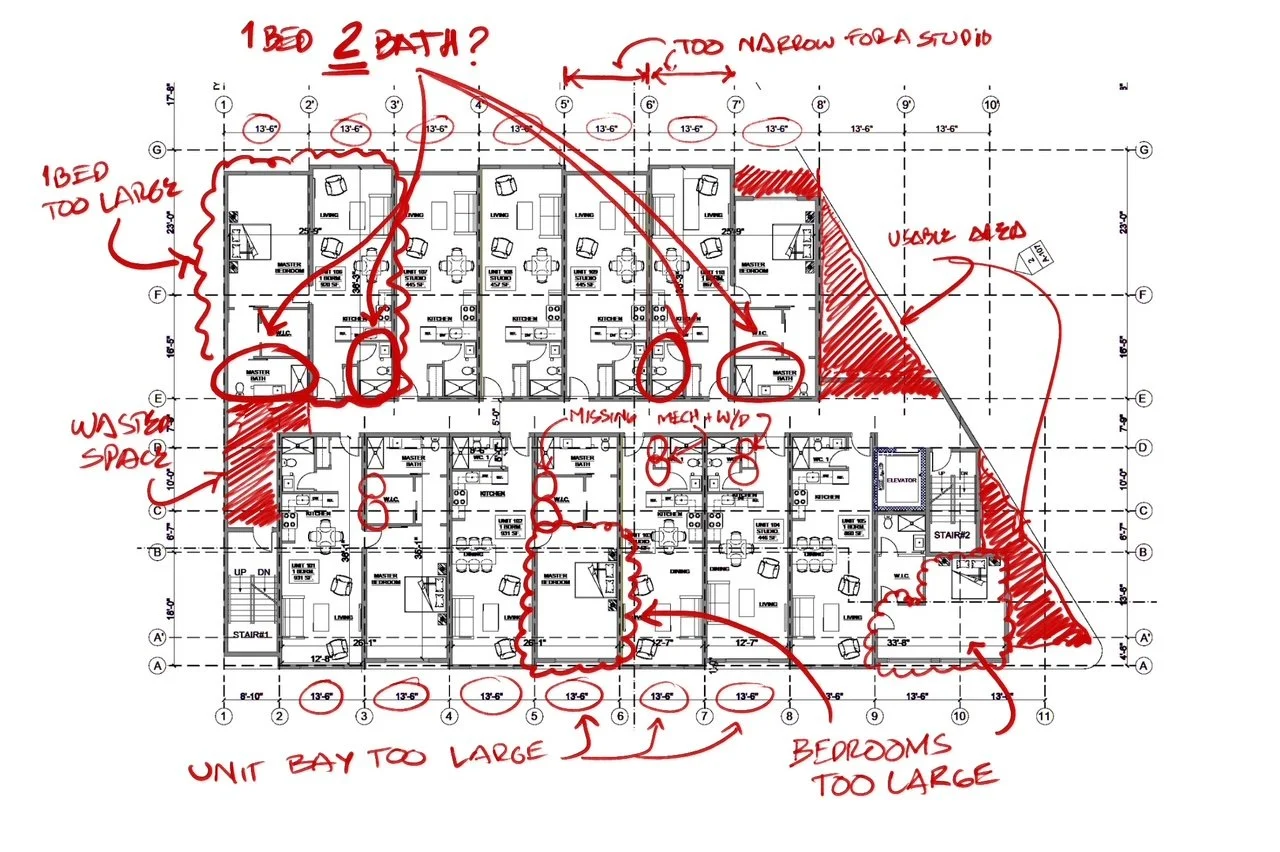
810 Washington came to us fully approved. The ZBA had signed off. The developer had already acquired the project. The program was set: fifteen studios and fifteen one-bedroom units. On paper, the deal worked. The construction budget was reasonable. The building wasn’t in trouble.
But it wasn’t performing.
Nothing was fundamentally wrong. The envelope made sense. The materials were straightforward. The numbers penciled. And yet, the design wasn’t doing what it should have been doing: extracting the full economic potential of the square footage.
In multifamily housing, design is not about style. It’s not about finishes or Instagram moments. It’s about performance. Every square foot either produces revenue or quietly erodes it. And at 810 Washington, too many square feet were underperforming.
We didn’t increase the size of the building. We didn’t add luxury materials. We didn’t touch the structural system. Construction costs remained exactly what they would have been under the original design. Same concrete. Same framing. Same façade logic.
What changed was intelligence.
We rebalanced unit proportions so that one-bedrooms felt generous rather than tight. We adjusted circulation so that hallways stopped consuming rentable area. We tuned furniture layouts so rooms felt deliberate instead of leftover. We refined window relationships so units felt larger, brighter, more valuable. None of it flashy. All of it surgical.
The result was simple and measurable: monthly revenue increased by 10%.
Not because the building became more expensive to build. Not because we added premium finishes. Not because the market shifted. Revenue increased because the design began working as an economic tool instead of just a compliance document.
That ten percent, spread across thirty units, compounds dramatically over a hold period. Over ten years, the delta dwarfs the architectural fee. And that is the part of residential architecture that is rarely discussed: thoughtful layout strategy can outperform cosmetic upgrades every time.
810 Washington wasn’t a distressed project. It didn’t need rescuing. It needed recalibration. It proved something we see repeatedly in housing: mediocre design costs the same to build as intelligent design. Only one of them maximizes return.
In residential development, the unit plan is the engine. When it’s tuned properly, the building performs. When it isn’t, the opportunity cost lingers quietly in the pro forma.
Good design doesn’t always cost more.
But it almost always earns more.