
Anatomy of a Zombie Project
Residential development then and now, and what a decade of cheap money left behind.
They come to us approved. Entitled. Drawings far along. Sometimes years of community process behind them, public hearings and variance applications and neighborhood meetings that took longer than anyone planned.
But the project cannot start. It does not pencil anymore. Not because the idea is wrong. Not because the site is bad. Because the design was conceived in a different financial reality and never stress-tested against this one.
We call them zombie projects. Legally alive. Financially dead.
Cheap money did not cause weak assumptions. It just made them survivable. When money got expensive, the assumptions were still there, and nothing was forgiving them anymore.
What the Cheap-Money Era Hid
For most of the 2010s and again through 2020 and 2021, residential development operated in an unusually forgiving environment. Rates near zero, abundant capital, cap rates compressed to levels that told you exactly how aggressively investors were pricing risk. In that environment, the pro forma could absorb inefficiency. Wandering corridors, oversized lobbies, unit plans overbuilt for the submarket, exterior systems far too complex for their contribution to the rent roll. None of it was ideal. None of it killed deals either.
Speed mattered more than precision. Capital was patient. Good enough was good enough.
What that decade quietly accomplished was the elimination of the penalty for weak thinking. And when the penalty disappears long enough, the skills required to avoid the mistake start to feel optional. Why stress-test a pro forma when the market will absorb whatever you build? Why interrogate a unit mix when rents are rising and absorption is fast? Why fight for efficiency when there is plenty of margin to lose?
The answer, of course, is that the market does not stay forgiving forever.
The Reversal
Mortgage rates peaked near 7.8% in late 2023. Construction costs surged over 33% from pre-pandemic levels. Cap rates expanded, compressing exit values at exactly the moment that building costs and debt service were climbing. Lenders got cautious. Underwriting tightened. The squeeze arrived from every direction at once.
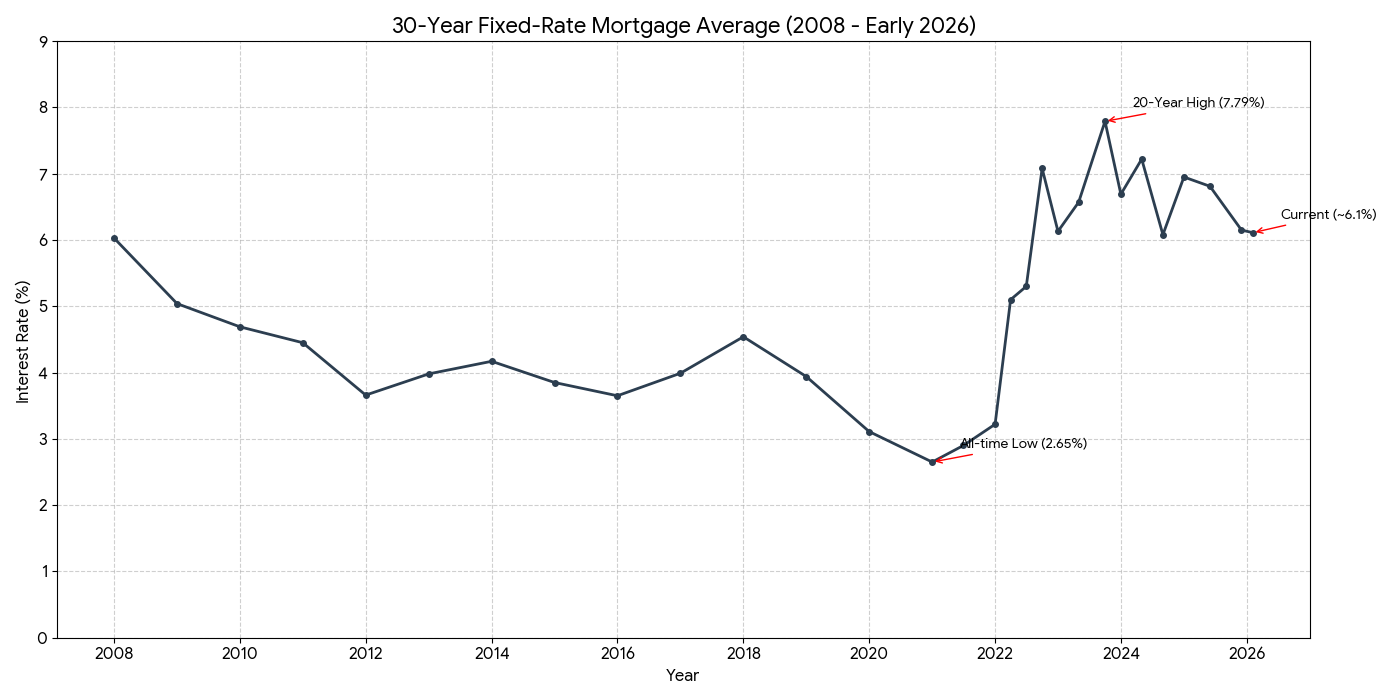
Projects designed under the old physics stopped working under the new one. Not because anything about them had changed. Because the assumptions baked into them had never been tested, and now the test was here.
That is the anatomy of a zombie project. Not a failed idea. A design that was never asked to run lean, in a market that now requires it.
What We Keep Finding Inside Them
When a developer brings us a stranded approval and asks whether there is any way to revive it, we do not start with the drawings. We start with a diagnosis. You cannot fix what you have not yet understood.
The patterns we find are consistent enough to be predictable. Corridors that meander and consume square footage that will never generate revenue. Core configurations, stairs, elevators, shafts, that were placed without much thought for efficiency and now impose structural and coordination costs throughout the building. Unit plans that are overbuilt for the submarket: bedrooms too large, living areas too small, layouts that look generous on paper but do not rent the way the pro forma assumed. Exterior systems that are complex and expensive and do nothing measurable for the rent roll. And in the most painful cases, code and coordination issues that were never resolved. Egress paths that do not hold up under scrutiny. Windows at the property line. Equipment placed in ways that compromise life safety. Problems that cheap money once allowed teams to buy their way out of in the field, and that a tighter budget cannot absorb.
None of this is about style. It is about feasibility. And it is the direct consequence of a market that spent a decade not requiring the discipline that good residential design demands.
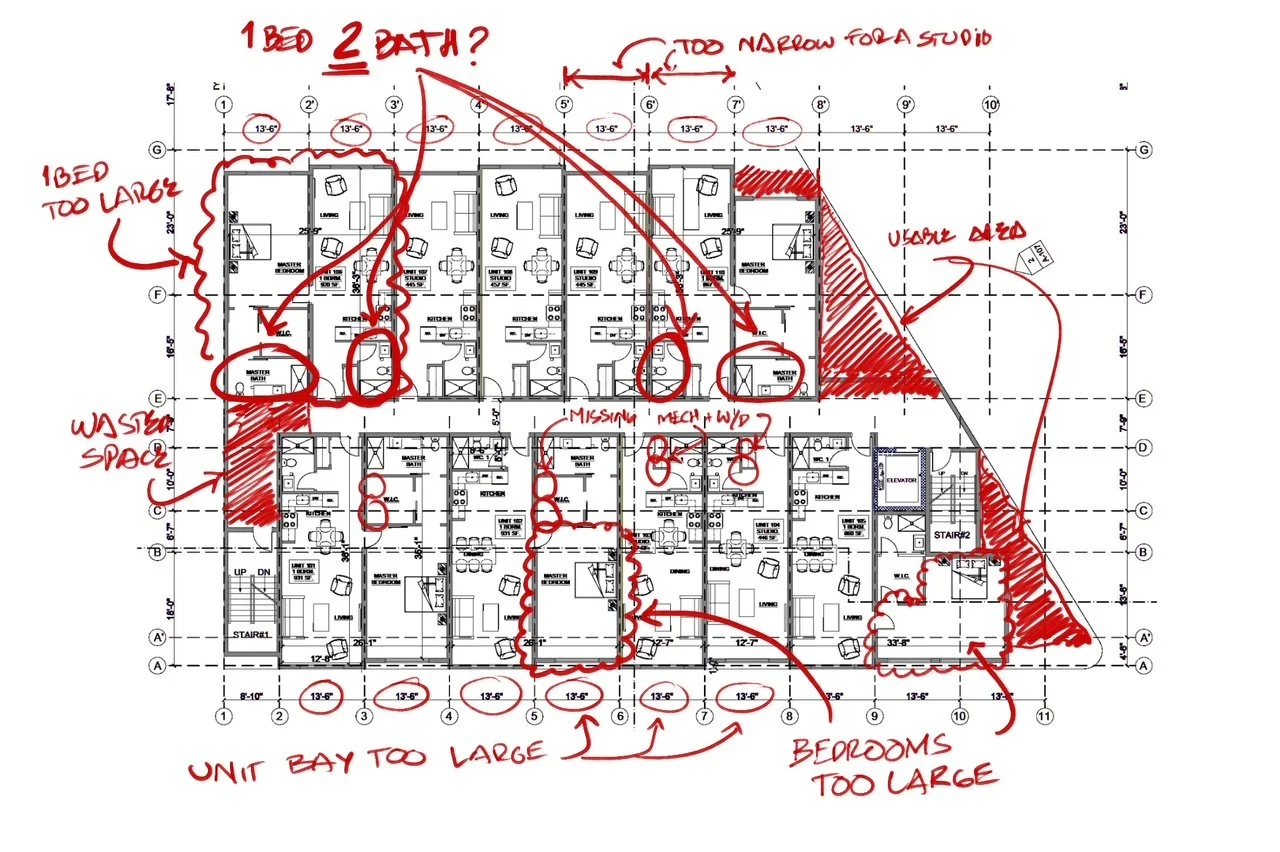
Market-rate multifamily is its own discipline. Unit dimensions, proportions, and mix are not arbitrary. They are a direct referendum on whether the building performs. The cheap-money era made it easy to forget that.
What We Do About It
The first thing we do is not touch the drawings. We rebuild the feasibility model from current reality. Today's rents. Today's construction costs. Today's underwriting environment. Only once we know what the project has to do financially do we know what the design has to do architecturally.
From there the work is systematic. Attack net-to-gross and cost drivers first, because those are the decisions with the largest multipliers. Recut the unit mix to match the market as it actually is today, not as it was imagined two or three years ago. Tighten coordination early, so that the contingency number is honest and the lender can believe it. The goal is not to value engineer something cheaper. It is to design the project that can be financed and built now. That is a different activity entirely.
Why These Projects Are Worth Saving
Zombie projects are not bad ideas. They are artifacts of a different physics. Most of them have something real to offer: a good site, hard-won entitlements that took years to secure, a developer who still believes in the project and still wants to build. The problem is not the vision. The problem is that the design expression of that vision was never asked to be efficient, and now efficiency is the only path forward.
When you get the redesign right, when you correct the product, recover the wasted square footage, simplify what does not earn money, and coordinate tightly enough that the contingency number is honest, the project can come back. We have done it. We are doing it. And the skill set it requires is exactly the integrated approach we have been building toward: design, cost, finance, constructability, and local product knowledge not as separate disciplines but as a single conversation happening from the first sketch.
The cheap-money years did not make architecture less important. They made it easy to pretend that deep residential expertise was optional. The market has stopped pretending. The projects sitting in that gap between approval and viability are the proof, and the opportunity.
Key Takeaways
Many approved projects fail due to outdated financial assumptions
Design inefficiencies directly impact feasibility
Today’s market requires integrated design, cost, and pro forma alignment
Efficiency is no longer optional — it determines whether projects get built